


This is us

We’re a team of journalists, editors, content creators, and other media professionals who believe that verified information is the foundation of a democratic society. Oštro is not a collection of individuals, but a connected team of people with diverse expertise who keep watch over facts, those who rule, and public interest.
NEWSROOM

Today, when we are faced with a decline in democratic norms and principles, investigative journalism is the last frontier before all kinds of totalitarisms.
She was taken by investigative journalism in 2006, when she was a journalist of the daily Delo that she divorced at the end of March 2018. She has acquired extensive experiences and specialized skills in investigative and data journalism, and continues to build on those as a the founder of Oštro in Ljubljana, Slovenia.
She spent the year 2015 in courtrooms while persecuted for allegedly publishing classified information in stories about neo-Nazis in the ranks of the political party SDS. She faced a three year prison sentence, but was eventually acquitted of all charges.
At the time, she also established “The MEPs Project” which brought together journalists that represented all 28 EU member states. Their demand that the European Parliament releases data on how Members of the European Parliament spend their professional allowances took them to the EU Court of Justice.
She works for OCCRP as a regional editor. She is a member of the International Consortium of Investigative Journalists (ICIJ) and the network of journalists behind Forbidden Stories. As a member of ground-breaking global investigations, such as the Panama Papers, Paradise Papers, FinCEN Files and The Laundromats she is a co-recipient of several awards, including the Pulitzer Prize on Explanatory Reporting.
For her data work and that of her team she received the Websi media award, and the Watchdog award for exceptional achievements given by the Slovene Association of Journalists. For her work on The MEPs Project the European online media outlet Politico Europe ranked her 6th among 28 most influential Europeans in 2018.
Her heart is divided to Slovenian on her mother’s side, and Croatian on her father’s side, therefore Oštro too will sit at the crossroads of both countries.
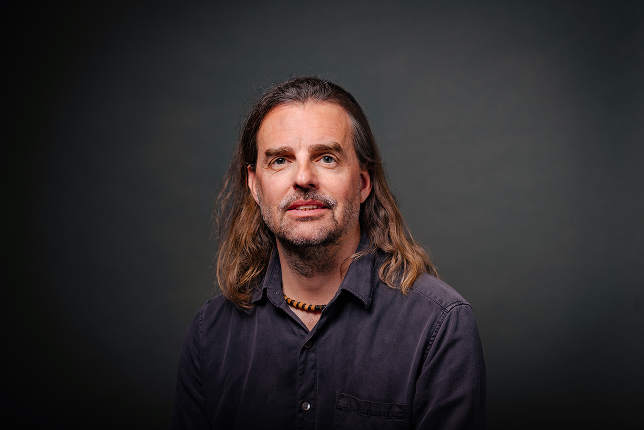
Journalism is a ticket to all worlds, from the shack to the palace, from the beggar to the Pope. The ticket is always valid for two people. Without the reader, the journalist cannot go anywhere. When they are together, it is fun: the journalist lifts the rugs for the reader to see what’s underneath.
Uroš Škerl Kramberger has been writing for Delo and its Saturday supplement Sobotna priloga since 2003, and for Dnevnik and its supplement Objektiv since 2006. In his articles and feature stories from Slovenia and abroad, he has reported on political power and the power of the people, social movements, conflicts, protests and migration. He is a recipient of the award for outstanding accomplishments in journalism given by the Slovene Association of Journalists, and the European parliament and Anna Lindh Foundation awards. He was an associate assistant at the Faculty of Social Sciences, University of Ljubljana, leading courses on journalistic practice and writing skills. He joined Oštro in 2024.

Like a mother-in-law who watches every move of her daughter-in-law, investigative journalism monitors data that often remains unchecked. For impactful action, it also needs a critical and responsive readership.
Meta Gantar is a graduate of journalism. During her studies at the Faculty of Social Sciences, she was the editor of the student newspaper Klin. As a freelance journalist, she worked for the Tednik show on national television, and continues to hone her speaking skills at the local radio Sora. She first encountered investigative journalism at Oštro where she was developing her skills during her bachelor studies.
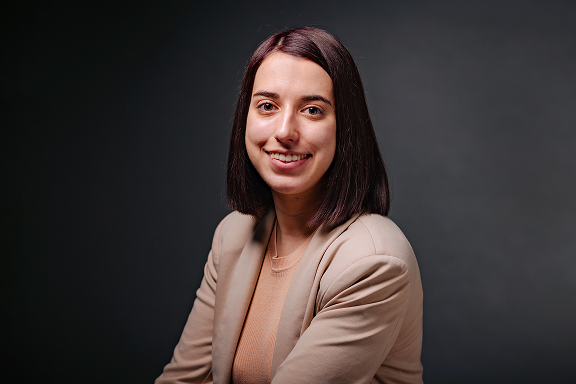
Investigative journalism, especially in the times of information overload, plays the role of a compass – it directs the public to credible information about power holders, and directs them to hold public office responsibly.
Nina Rozman is a journalism graduate and a master of Marketing Communication and Public Relations. She wrote articles for the website of the Naprej/Forward Festival organized by the Slovene Association of Journalists. She also honed her journalistic skills during her internship at the newspaper Dnevnik.

In the information age, when more and more media are becoming couriers of political propaganda, investigative journalism is the one that is concerned with transmitting quality information.
Žan Premrov is a graduate of history and cultural anthropology and a student of the pedagogical master’s degree in history. Before coming to Oštro, he worked as a journalist for the political editorial office of Radio Študent since 2021.

Investigative journalism reaches beyond superficial stories, making sense of complex numbers and data, and is vigilant of people in positions of power.
Eva Gračanin is a graduate in sociology and comparative studies and a master’s student in sociology and pedagogy. In addition to being a journalist at Oštro, she also works as a journalist at Radio Študent.

Investigative journalism is the bulwark of a profession that is all too often — and increasingly — reduced to the uncritical transmission of stakeholders’ positions.
Antun Katalenić got into journalism through the current affairs desk at Radio Študent, where he also served as chief editor. Before joining Oštro, he had covered foreign affairs at the Slovenian Press Agency. He has also worked with several domestic and international media outlets as a freelance journalist.

Quality journalism makes the authorities and the privileged angry and empowers everyone else.
Žana Erznožnik is a journalism graduate and a master of Marketing Communication and Public Relations. During her studies, she was the editor-in-chief of student newspaper Klin and she and her team received two best student achievement awards by the Chair of Journalism at the Faculty of Social Sciences of the University of Ljubljana. Before joining Oštro, she reported on politics at the Slovenian Press Agency and was a journalist at the weekly magazine Mladina. At Oštro, she leads the fact-checking project Razkrinkavanje.si and cooperates in investigative projects. For the Smetosled project, she and the team received commendation from the Association of Journalists of Slovenia.

Investigative journalism is a beacon that exposes injustices and guides those who seek the truth.
Lara Drugovič holds a degree from the Faculty of Criminal Justice and Security, where she completed her studies with a thesis on media ownership. She is continuing her academic path in the master’s programme in journalism, focusing on data journalism and developing a strong interest in investigative reporting. She is expanding her knowledge through her work at Oštro.

Even in an age of disinformation and fake news, we must care not only about what we report, but also about how we speak about these things.
Aljaž Primožič graduated in philosophy and Russian studies from the Faculty of Arts and is currently completing his master’s degree in journalism at the Faculty of Social Sciences. In addition to investigative journalism, he writes semi‑literary and literary texts published on various platforms in Slovenia and abroad. He joined Oštro in the spring of 2025.

ILLUSTRATORS
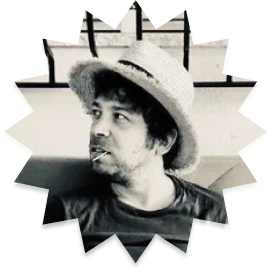
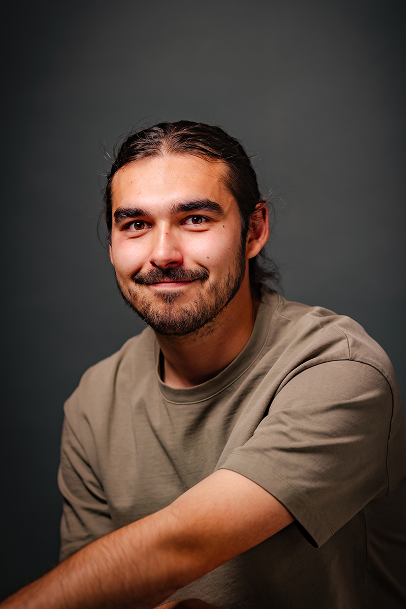
Investigative journalism is digging to the bottom, peeking under the rug, revealing the other side of the coin … all the things for which we far too often run out of time or patience today.
Matej de Cecco is an illustrator and comic artist. A translator and interpreter by training, he now illustrates youth publications and designs mascots, mobile games, and comics. He lives and works in Ljubljana.

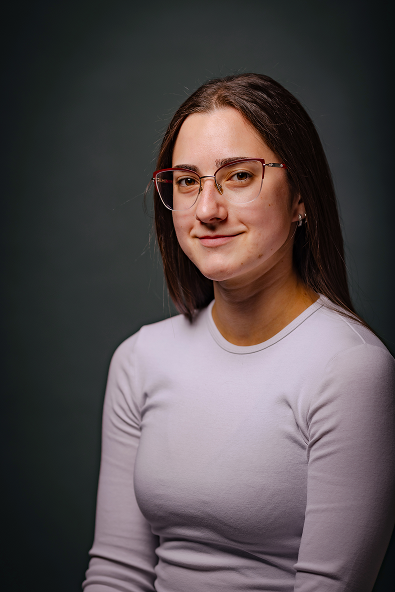
Investigative journalism is like a helmet for the nose — the very nose others so often like to pull.
Milanka Fabjančič is an illustrator and author of animated films. After completing her painting studies at the Academy of Fine Arts and Design in Ljubljana, she channelled her drawing skills into storytelling — often stories without words. Her illustrations are rich in codes and hidden meanings, frequently shedding new, unexpected light on the work of writers, columnists, and screenwriters. She teaches the course Zgodboris at the School of Arts, University of Nova Gorica. She adores animated films and has devoted most of her recent years to them. She loves both grounded people and dreamers, but she does not appreciate being led by the nose.
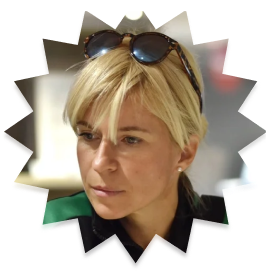
Abuse of power is followed by outrage — an outrage that becomes inspiration for how to inform others about that abuse.
Samira Kentrić is a visual artist who blends public and political language with the intimate sphere of everyday life. Through her work, she seeks to communicate what remains unreflected — and therefore uncomfortable or hidden — in contemporary society. She has illustrated numerous books and newspapers, including Dnevnikov Objektiv, Sobotna priloga Dela, Mobitel’s Zaupne besede, Finance, and the Academy of Theatre, Radio, Film and Television theatre programme. She collaborates with various publishers and authors and occasionally writes original articles. Three of her graphic novels have been published to date: Balkanalije, Pismo Adni, and Adna.
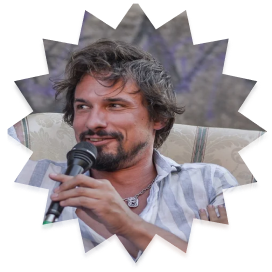
The world must be explored, sifted through, and examined to see what in it is true and what is not. And then it must be drawn.
Izar Lunaček is a philosopher and comic artist with a dozen published albums (including two abroad) and several dozen illustrated books for children and young adults. In his spare time, he runs the comic shop Striparna on Ljubljana’s Poljanska Street, organizes the Tinta comic festival, and translates works by French comic authors into Slovene — a contribution for which he received the French Order of Arts and Letters.
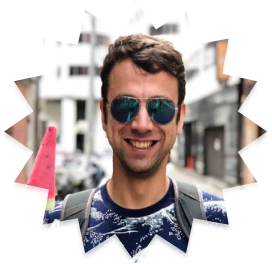
Investigative journalism does not blow away the stench — it reveals its source and the reasons it came to be.
ADMINISTRATION

darja@ostro.si
Photo: Matej Povše
Today, information travels faster than our ability to reflect on it. I miss critical thinking. That is why investigative journalism matters not only because it exposes wrongdoing, but because it teaches people to distinguish between opinion and fact, belief and evidence. It teaches them to think.
Darja Tibaot Ciringer, MA in political science and BA in journalism, has more than 25 years of media experience. After over two decades of journalism at POP TV and RTV Slovenia — where she produced complex stories on social change, the economy, and politics — she shifted toward strategic communication, content‑project management, and communication campaigns. Today, she combines her journalistic expertise with strategic communication, team leadership, teaching, and doctoral research in critical thinking. As a member of the expert committee evaluating undergraduate theses, she successfully transfers her extensive media knowledge into pedagogical practice.

Only independent investigative journalism is actually the fourth pillar of any serious democracy and an invaluable source of informed and aware public.
Manca Šetinc Vernik is a communication graduate with years of experience in project management, development of didactic modules and manuals, and conducting global learning, human rights and non-discrimination workshops and trainings. She gained experience at the Human Rights Ombudsman of the Republic of Slovenia, the Institute for Ethnic Studies, and in the non-governmental sector, where she has been active for the last 15 years. She also worked as an external expert for the Council of Europe, the European Commission, and the Organization for Security and Cooperation in Europe.
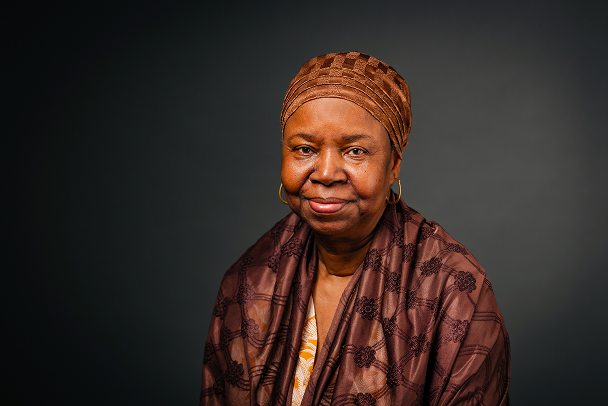
Photo: Matej Povše

The stories we tell ourselves determine our reality. It depends on us what kind of world we live in—a world of truth or a world of illusions.
A graduate in culture studies and journalism, she gained media experience at the media house Delo. Additionally, she wrote for foreign publications such as Unearthed Women, Versopolis, and Slovenia Times as well as Static Media. She still utilises her journalistic knowledge and sixth sense in the field of advocacy and public relations, where she observes with great interest the age of post-truths and the paradox of a technologically advanced but devoid-of-meaning society. She is aware of the importance and power of investigative journalism in a society that faces ideological, geopolitical, and ecological challenges. When she’s not working with words, she’s wandering through the worlds of images as a photographer.
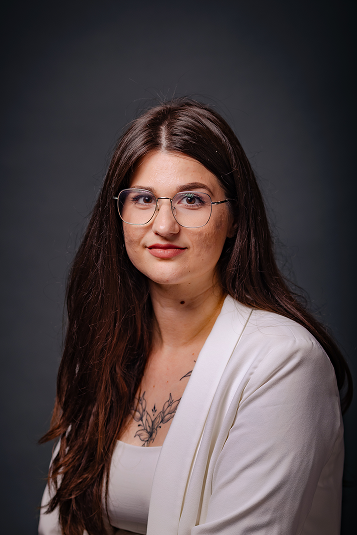
Photo: Matej Povše
Investigative journalism is a fight against the distortion of facts and the spread of disinformation. When Pandora’s box one day opens and all the lies escape, only hope will remain.
Ana Maria Bratić holds a degree in textile engineering and is currently studying graphic and interactive communications. During her studies, she worked on projects across various fields, preparing and designing visual solutions for different clients, including the Ljubljana Firefighters’ Association and the Slovenian Hospice Society. During her internship at the advertising agency Internavti, she created social‑media content for clients such as Velux, bob, and Generali Investments. At Oštro, she continues her creative path by producing diverse content for multiple social‑media platforms.
BOARD MEMBERS

Photo: personal archive
Investigative journalism is one of few things that still make a big difference for the better in the world.
Based in Sarajevo, Miranda Patrucić is an investigative reporter and editor in chief of OCCRP focusing on Central Asia, the Balkans and the Caucasus. She is the recipient of the Knight International Journalism Award, the Global Shining Light Award, the IRE Tom Renner Award, the Daniel Pearl Award and the European Press Prize. She is much in demand worldwide for training journalists on how to investigate and uncover corruption, money laundering and how to follow the money. She is a member of the International Consortium of Investigative Journalists (ICIJ) and the network of journalists behind Forbidden Stories.
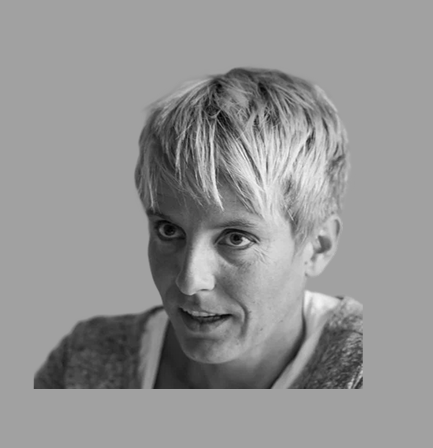
Photo: personal archive
Investigative journalism is the essence of journalistic profession. Without those who help us sort the wheat from the chaff, the world would be a lot less democratic and free.
Nataša Briški holds a university degree in journalism and an MA in Political Science from the University of Ljubljana. She works as a consultant for strategic communications and the management of social media and new media platforms, and provides advice in the field of public relations, efficient media communication and public speaking.
She is the co-founder and director of Meta’s List Institute (Sl. Metina lista), a manager of the team that creates the content for metinalista.si web platform, the co-author of podcasts for Meta’s tea (Sl. Metin čaj), the European quarter (Sl. Evropska četrt) and LD;GD. She is also a member of the Expert Council for Gender Equality (the Slovenian Ministry of Labour, Family, Social Affairs and Equal Opportunities), a member of the Committee on Equal Opportunities in Science (the Slovenian Ministry of Education, Science and Sport) and a member of the Human Rights Council.

Photo: personal archive
The role of investigative journalism is uncovering all kind of wrongdoings and lies of people and organisations in power.
Nils Mulvad is a co-founder of the Global Network for Investigative Journalism and other international networks such as Farmsubsidy.org. He was CEO for the Danish International Center for Analytical Reporting, Dicar, 2001-2006, European journalist of the year in 2006, and he also teaches data and web courses for journalists with focus on using social and mobile media. Nils Mulvad is partner and editor at Kaas & Mulvad and has been associate professor at the Danish School of Media and Journalism from 2001 to 2015.
Like a mother-in-law who watches every move of her daughter-in-law, investigative journalism monitors data that often remains unchecked. For impactful action, it also needs a critical and responsive readership.
Meta Gantar is a graduate of journalism. During her studies at the Faculty of Social Sciences, she was the editor of the student newspaper Klin. As a freelance journalist, she worked for the Tednik show on national television, and continues to hone her speaking skills at the local radio Sora. She first encountered investigative journalism at Oštro where she was developing her skills during her bachelor studies.
BOARD OF EXPERTS MEMBERS
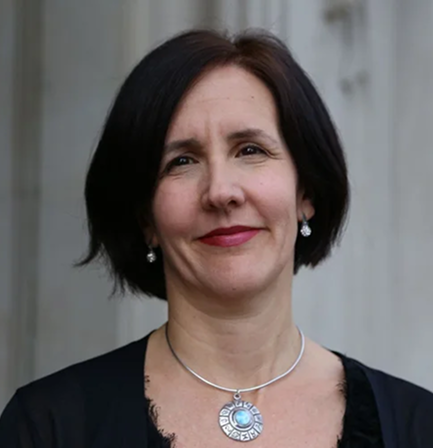
Photo: personal archive
The role of investigative reporting is to uncover broken systems and abuses of power that harm people.
Marina Walker Guevara is the Executive Editor at the Pulitzer Center. Formerly, she was the deputy director of the International Consortium of Investigative Journalists, a network of reporters in 80 countries who collaborate on stories of global concern. She has managed the two largest collaborations of reporters in journalism’s history: the Panama Papers and the Paradise Papers, which involved hundreds of journalists and media partners using technology to unravel stories of public interest from terabytes of leaked financial data.
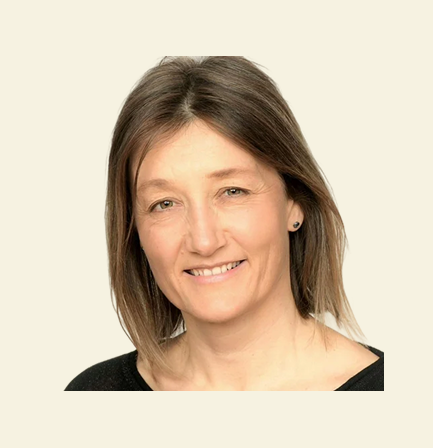
Photo: personal archive
Investigative work, the disclosure of truth that the power-holders are trying to conceal, is a cornerstone of quality journalism which is key to maintaining a democracy that functions in the interest of the public.
Mojca Pajnik is an associate professor at the Department of Media and Communication Studies at the Faculty of Social Sciences, University of Ljubljana, where she teaches about media systems as well as political and intercultural communication. She is a Research Counselor at the Peace Institute, head of the research program »Equality and human rights in the age of global governance« and the head of several research projects in the field of media and communication.